
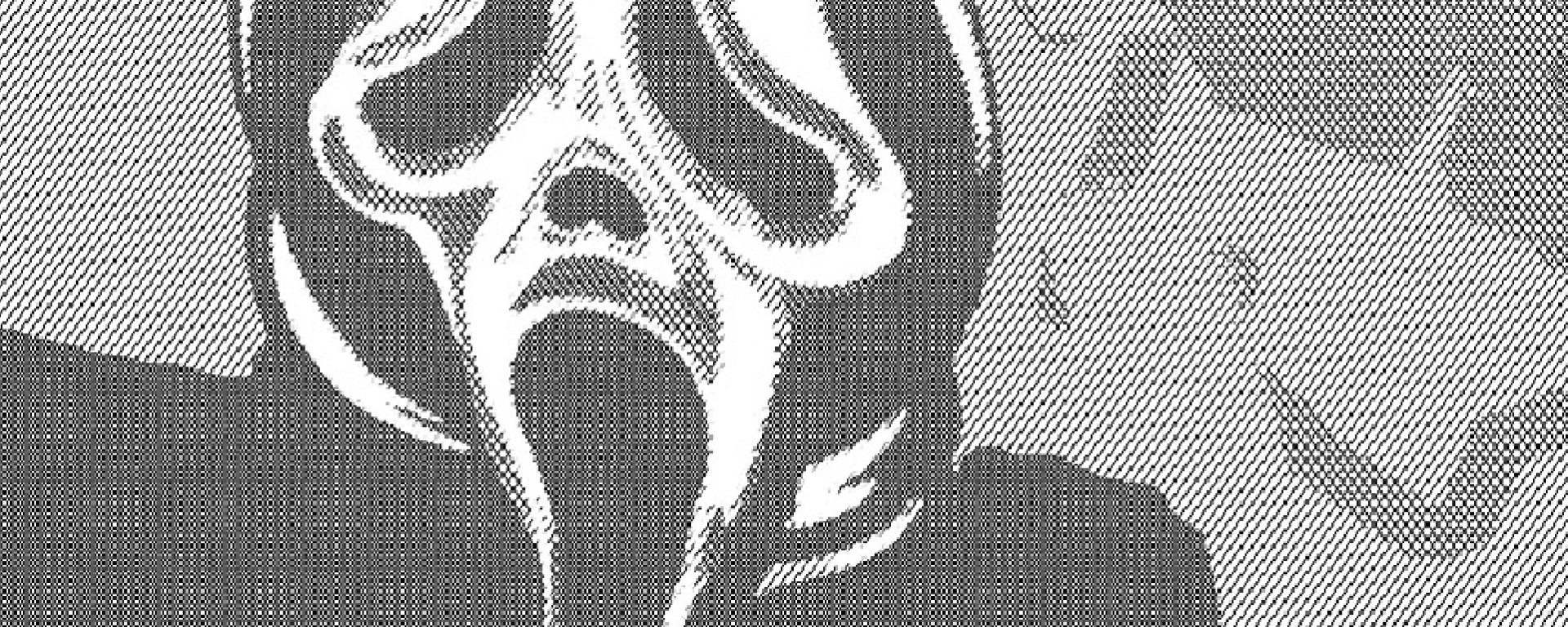


Nihilism originates in the Latin nihil which means nothing. The “ism” component conveys ideology, meaning the systematization of an idea. Etymologically speaking, then, nihilism systematizes the idea of nothing. We could say that nihilism champions the pro-nothingness of existence. Yet “nothingness” is notoriously impossible to grasp. If we try to imagine nothingness using the thought-experiment of stripping everything away, we are left with a (sort of) disembodied consciousness picturing empty space. Hardly nothing.
Nihilism as the ideology that promotes the idea of nothing cannot literally be about nothing, since nothing literally does not exist (and if it does, we are not privy to it). Rather, nihilism turns existence into “nothing” (or nothing-but). Everything that is becomes rendered as ultimately “all sound and fury signifying nothing.” From the standpoint of nihilism, existence is a fleeting play of (nothing-but) material phenomena with no inherent purpose or meaning. Entities (living and nonliving) tumble around inside a big nothing and eventually tumble out into a big nothing. Nothing, somehow, holds everything together.
In popular culture, nihilism is taken to mean the felt sense that things are futile and bound ineluctably toward dissolution. This is a reasonable description of the human experience of nihilism, but it does not deliver its meaning. The meaning of nihilism derives from its metaphysics.
What’s the meaning of metaphysics? Metaphysics is an overarching (meta) view of reality (physics). The suffix “physics” refers to what we experience with our senses and the extensions of our senses: What we call “the material world.” Meta-physical thought purports to capture the ultimate status of that shared reality. In other words, metaphysics angles to disclose the meta nature of all that is. Like the Panopticon Tower’s all-seeing Observer, anthropos, via metaphysics, can claim to see all that exists from a comprehensive and authoritative standpoint.
According to the metaphysics of nihilism, existence is void of the sacred. Reality is denied the understanding of being suffused by and expressing something higher. “Are we not straying as through an infinite nothing?” screeched Nietzsche’s madman. “Do we not feel the breath of empty space?” Before considering the madman’s punchline (God is dead), the following is crucial to understand about nihilism’s ascent and impact: It is not so much that the supra-sensory realm (God, gods, supernatural entities) has been ousted and declared noncredible. It is the sacred within the world that’s been resolutely refused. This is what nihilism does to the world we inhabit, and it is far more consequential than what nihilism professes about transcendental reality. Why? Because desacralizing the world authorizes crushing it. This is why the ruling metaphysics of nihilism lead directly to physical annihilation.
Nihilism profanes the world (blots out its sacredness) by vacating inherent qualities from all that exists. This is the inceptional move of nihilism, and it is exactly why nihilism is the metaphysics of human supremacy: By evacuating inherent purpose and meaning from all there is, everything becomes amenable to be assigned purpose and meaning by and for the human. Nihilism is nothing if not human totalitarianism.
To turn existence into “nothing,” nihilism erases the primordial primacy of self-being from all that exists and then erases the erasing. This eerie crime lodged at the core of “normal” remains virtually unregistered by the masses. Tacitly or overtly, nihilism decrees existence to be vacant of inherent standing. With nihilism, the being of beings in-themselves is bypassed and replaced with the being of beings at-human-disposal. Subsequently, the being of beings at-human-disposal is so hammered into the human collective from every possible angle that it’s made to appear as just how things are. Nihilism simply refuses to encounter beings on their own ground and expropriates them over to the human.
Nihilism also refuses to countenance existence, as such, let alone make any effort whatsoever to contemplate it. The nihilist standpoint circumvents existence itself by disallowing human thought from encountering its bedrock is-ness. That’s where no description is possible, no explanation is forthcoming, and no theory has purchase. Paraphrasing a fitting quote from Ludwig Wittgenstein, when reason comes face-to-face with the sheer event of existence, we hit bedrock and the human spade is turned. When thought ventures all the way to existential bedrock, then, as Japanese philosopher Keiji Nishitani put it, existence turns into a single great question mark. (Meaning, sorry folks, no more answers are effable.) It is crucial for human understanding to arrive at and ponder “the great question mark”—and not to brush it aside, which is what nihilism does. Nihilism circumvents the nonnegotiable mystery of existence by pretending that no mystery exists.
Nihilism’s rendering of existence as being at the end of the day (sigh) about nothing (-but)—no purpose, no meaning—is a metaphysical view; an all-encompassing conception of reality. Nihilism has not even walked into the anteroom, and it’s fallen flat on its face: For nihilism draws thinking out to where thinking has nowhere to stand. The standpoint of nihilism self-refutes, given that the human is (self-evidently) limited and therefore cannot claim to know the nature of existence from a Panopticon view. Nevertheless, nihilism has stepped from anteroom into the Great Hall, having become (by far) the shared metaphysics of civilized humanity. Indeed, nihilism has been elevated to “central dogma”: The dogma that there exists nothing higher: Nothing higher, in other words, than man.
Herein lies the intimate connection between nihilism and human supremacy. Nihilism hands over unconditional power and the entire estate of Nature to man. In the wake of nihilism, the metaphysics of human supremacy, the (profane) terrain of existence becomes constituted as one to conquer and denature, and as “frontier” and blank slate for anthropos to doodle upon and dabble with at will, whim, or for whatever purpose. Existence qua all-sound-and-fury-signifying-nothing emboldens the human by granting the license of anything goes. And planet Earth becomes, in indigenous thinker Ailton Krenak’s words, “humanity’s backyard.”
Even though nihilism is groundless—making a pitch to represent reality at a level inaccessible to thought—it has nonetheless triumphed. Nihilism seduces the human with absolute power. Human supremacy is established on the first lie as its foundation—the definition of anthropos as center. After which everything else becomes “the periphery,” while humanity becomes, as it were, the Global North of the planet. For most humans this arbitrary authority seems natural; they remain unaware that they are living a lie that leads literally to a dead end.
Human supremacy, wielding the metaphysics of nihilism, seizes absolute power, going forth to grant the highest “cosmic station” to man. Mangod is born. The human is surreptitiously authorized to know the all-encompassing nature of existence by make-believing to be God. Proffering Godhood to anthropos, nihilism validates both human power over everything else and human insight into ultimate reality. Thus, Nietzsche’s punchline misfires. God is not dead. Humanity has appropriated the mantle of God. The human has become omniscient, omnipotent, and entitled to omnipresence.
Nihilism is often deemed a modern metaphysics, but it is older than modernity. (The Romans, for example, arguably lived it.) While the inception of nihilism is lost in the mists of time, it began its rise to central dogma after civilization’s emergence. That was the time when civilized man first heralded an abyssal rift between humans and the rest of nature and started to trumpet the human alliance with, and later promotion into, Godhood. The slow-motion ascent of nihilism is coeval with the usurpation of Godhood. And that usurpation is founded on the primary move of nihilism: denying existence inherent standing, bypassing the self-being of beings, discounting the mystery of existence. Only then does humanity become fully inoculated from deferring to anything higher. Only then are humans authorized to lord over everything, in possession of the usurped Godhood warrant.
Nihilism extracts a Faustian deal from the human. Nihilist metaphysics ensures that anthropos may reign over the earthly realm, and dream of reigning beyond it, but in exchange for such cosmic clout the human must, perforce, believe that existence lacks inherent purpose and meaning and that the sacred is an archaic, obsolete fancy. For only when being and beings no longer command the human through their inborn presence can absolute power be exercised without compunction or accountability. To expand on this with a stark example that stands in for “10 thousand things”: Nihilism permits the human to vivisect an animal on condition that the human sees the animal’s agony and hears the animal’s cries as all sound and fury signifying nothing. Nihilism’s diabolical extraction is blindness and ignorance for “power.” An oddly dissonant consequence of the pitch for Godhood.
What is “the sacred”? Sacredness is often conceived as a quality infused into phenomena by a sublime power that resides outside them and precedes them. Many people think of the sacred this way—as an otherworldly bestowal. But while this view wants to explain the sacred, it does not deliver its meaning. The meaning of the sacred can only emerge when we feel into the disposition that arises within us when we come within its precincts: We are decisively barred from belittling, instrumentalizing, using, exploiting, destroying, hurting, or manipulating. Sacredness is/means inviolability. The sacred arises between human and other, I and Thou, as an irresistible summons to restraint and to care. This is because sacredness inhabits phenomena as their inherent standing. When inherent standing is recognized by the human the sacred comes palpably into view.
A passage from philosopher Gaston Bachelard touches on the sacred by drawing on the example of forest: “The forest,” he wrote, “is immediately sacred, sacred by virtue of the tradition of its nature, far from all history of men. Before the gods existed, the woods were sacred, and the gods came to dwell in these sacred woods” (italics original). This passage opens a portal to the sacred through insights that we may contemplate: That the sacred is so indelibly inborn to existence that it invites divinity to dwell in it. The gods, Bachelard tells us, came to inhabit the woods enchanted by their sacredness.
Sacredness—inviolability—is what human supremacy, with its metaphysics of nihilism, repudiates. Human supremacy will have (an)nihilated countless beings and places worldwide in the time that it took you to read this sentence. This horrific spectral of death, extinction, and suffering is deemed justified because the (an)nihilated are nothing.
Human supremacy is endangering everything across the board with annihilation, including the human species. At some point, the specter of mass extinction may rise clearly before the multitude. At that point, perhaps, there lives the possibility that humanity will turn homeward to what-is, acknowledging and finally simply admitting that what holds us is higher, far higher than us. Then the charade of Godhood can be dropped, and sovereignty returned to reality, meaning back to all creation. Turning to Earth as inviolable home is our only chance to supersede nihilism, before nihilism’s inevitable endpoint of total annihilation.
Sources
Bachelard, Gaston (1969). The Poetics of Space. Beacon Press.
Bing, Stanley (2006). Rome, Inc.: The rise and all of the first multinational corporation. W.W. Norton and Company.
Gertz, Nolen (2019). Nihilism. MIT Press.
Heidegger, Martin (1954/1973). “Overcoming metaphysics.” In The Heidegger Controversy: A Critical Reader. R. Wolin ed. Columbia University Press.
Krenak, Ailton (2020). Ideas to Postpone the End of the World. Anansi International.
Nietzsche, Friedrich (1882/1974). The Gay Science. Vintage Books.
Nishitani, Keiji (1983). Religion and Nothingness. University of California Press.
Schelling, F.W.J. (1809/2006). Philosophical Investigations into the Essence of Human Freedom. State University of New York Press.
Shakespeare, William (1623/1924). The Tragedy of Macbeth. Yale University Press.
Wittgenstein, Ludwig (1953/1968). Philosophical Investigations. Macmillan.
 Earth Tongues